What Virtual Worlds Can Learn from the Social Serendipity of Arc Raiders (Guest Post by Matt Daly)
"I remember Jenova Chen likening 'Journey' to running into a stranger on a remote hiking trail. This feels like that all the time, but you can talk..."

Originally published on my Patreon
Matt Daly is an Austin-based product, business & marketing consultant in Games & Emerging Tech. He grows partnerships at SciPlay, one of the largest social games publishers on mobile, and is a long-time SXSW Board Advisor.
Arc Raiders is massive multiplayer group therapy for a generation of men who were taught to put up and shut up.
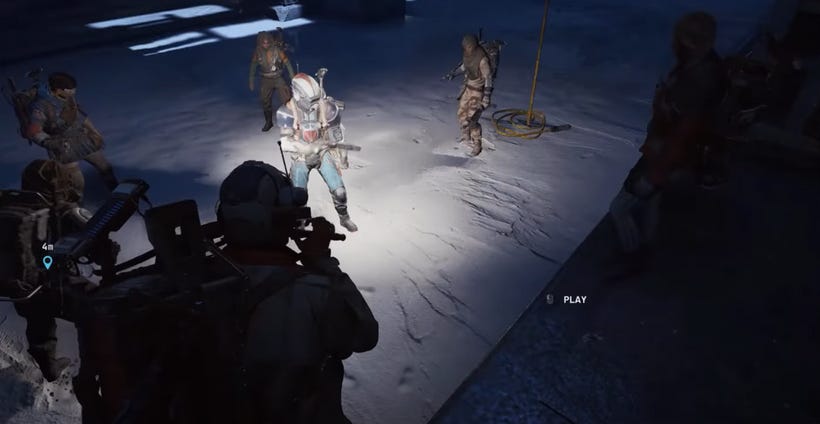
With around 130 hours playing in Embark Studios‘ Arc Raiders, here’s a supercut (above) of some of my fave emergent moments from this anthropology simulator MMO masquerading as an extraction shooter.
First, a quick whistle-stop through the genre now called Extraction Shooter: Made famous by Escape from Tarkov, the format is simple: Get in, grab a bunch of loot, get out. Simpler than it sounds, as you’re confronted with a match timer, and hostility from AI, some other players, and the environment itself. Arc Raiders has been a breakthrough success because it simplifies the typically dense mechanics of the game type, leans into the unpredictability of player-player interaction (keeping tension and risk just high enough while keeping the game fun), and it absolutely knocks the aesthetics, visuals and sound, out of the park.
While Arc Raiders is tight and polished in the way any great game is, what makes this one special is all of the stuff around the edges made possible in multiplayer mode: people looking for connection, opportunities for performance and improv role playing, cathartic release etc. Dance-off’s, double-crosses (or the juicy risk that introduces into every second of gameplay), talking on proximity voice about fatherhood, relationships, and substance abuse while blasting, you name it and I’ve seen/done it in this “game.” I’ve even chosen Arc Raiders over Google Meets for some work meetings (like Dean Takahashi at GamesBeat).
While raiding, for instance, I commiserated with another rando dad (heard baby in background) about getting older, watching our parents go away and welcoming new younglings, all while hoofing it to an extract in the last minutes of a raid. By that point only one extract point was still open, and it was far away. It’s rare to see another player this late in a match, much less rush across the map together. The game does an amazing job of ratcheting up the sense of impending doom and creating a sense of urgency to get out. The machines start appearing in droves, inbound ballistics start smashing into the edges of the map creating shockwaves. It’s pretty apocalyptic each time, and it was an utterly bizarre setting to be having that conversation about aging, birth, death, etc.
The metaphor I always use is the difference between sitting across from someone in a scheduled meeting vs taking a road trip, sitting next to each other looking forward toward a destination. It unlocks all the good stuff that lowers our defenses, and brings in vulnerability and great memorable interaction. Ironic for a game all about avoiding getting ganked by fellow players.
Mostly prox voice char is the GOAT feature I knew it would be last year when videos from the beta started popping up on my feed.
So, live service games peeps, watch and play this. It’s a clip printing machine by design, and has incredible built-in acquisition and winback functionality in these emergent unpredictable storied matches and interactions. Brands, pay attention too: meet your audience where they spend hundreds of hours immersed.
I remember Jenova Chen likening “Journey” to running into a stranger on a remote hiking trail. This feels like that all the time, but you can talk.
Then zooming out one more notch: its interesting that there are 2 distinct communities here: older guys like me who prefer cooperation and talking and dancing and flute playing and PvE and don’t really like shooting each other much, and sweatier younger PvP players. The game places you in matches, a.k.a. lobbies with other players that are either friendly or hostile depending on whether you yourself have behaved friendly or hostile up to that point. Based on my interactions with the community on Reddit and elsewhere, most players are social, PvE types.
PvE lobbies have genuinely made me feel delighted, less alone, and more hopeful for my fellow man. (Yes I literally mean men: listen to the voices on comms, read Reddit/Facebook posts about Arc, and some 98% are by males.)
For all the talk about the metaverse and UGC social spaces and future of engagement, we have to remind ourselves for the billionth time: the magic circle exists to provide structured play WITHIN which all that rich social Richard Bartle Raph Koster stuff happens. For wideband adoption of open-ended virtual worlds, users need to be players, and players need structure to return over and over to these worlds en masse.
Great capital G Game first. The rest follows.
Connect with Matt Daly on LinkedIn here.
Starting Advice for Sociable Virtual World Users
Be kind and the game will matchmake you with other kind players. You can YouTube more specifically how to ensure you’re in friendly lobbies.
Don’t shoot other players on sight, and opt for more escape than conflict when attacked by other players. The matchmaking system will then start matchmaking you with other co-op PvE players who prefer to work together (or ignore each other) against the bots.
Warning: Players who do enjoy PvP can also get quite vicious and conniving with other players, saying they’re friendly, or even co-op playing with you at first and then backstabbing later. The game’s “don’t shoot!” emote is a whole meme among Arc players for this reason. Sometimes it’s a ploy.
Got a virtual world opinion or experience you want to write / video about for New World Notes? DM my Discord at wja_hamlet